
Commercial planters do more than hold greenery. In offices, hotels, restaurants and other shared spaces, they can define zones, soften hard finishes and add a more welcoming scale to an interior. When lighting is integrated, the same element can remain visually useful after dark.
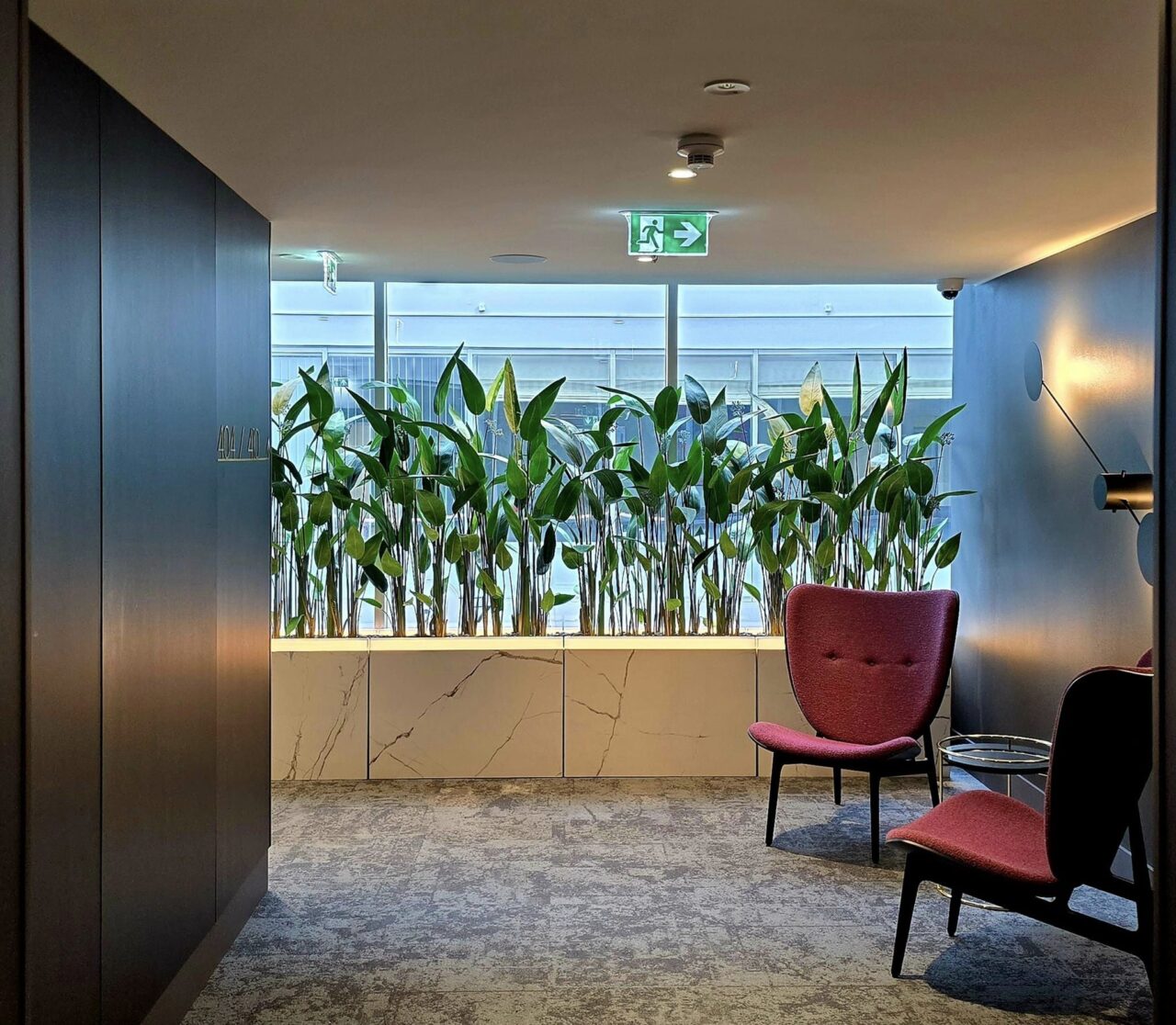
Choosing a planter for a commercial project starts with the space rather than a product photo. The best option depends on circulation, planting, material, maintenance and the overall lighting concept.
Where commercial planters work
Offices and reception areas
Planters can mark a reception point, create a softer edge around waiting areas or divide an open workspace without building a solid partition. A group of taller pieces can give a lounge more enclosure; a linear arrangement can guide movement while keeping sightlines open.
Hotels and hospitality
Entrances, lobbies, lounges and restaurants need to feel considered throughout the day. Planting and a low layer of integrated light can help a space transition into the evening. See our guide to hotel planters with integrated lighting for more on hospitality settings.
Terraces and transitional spaces
A planter can connect an indoor material palette to an outdoor terrace and provide a visual boundary near seating. Outdoor suitability, power access, exposure and planting requirements should be checked for the specific installation. Our illuminated terrace planters guide covers placement and material choices in more detail.
What to specify before ordering
- Role and proportion: Decide whether the planter is a focal point, a boundary or part of a repeated layout. Check dimensions against furniture, entrances and sightlines.
- Planting: Choose the plant form and maintenance approach together with the container. Confirm who will care for the planting after installation.
- Material: Match the finish to the surrounding architecture and the practical needs of the setting.
- Lighting and power: Coordinate integrated light with the broader lighting scheme and plan the electrical connection before installation.
- Access: Allow for delivery, cleaning and future maintenance, especially in busy public areas.
These decisions are easiest to make during concept and detailed design, before furniture, finishes and electrical plans are fixed. For a more detailed spatial-planning checklist, read our architectural planters guide.
Choosing a Lumillio collection
Lumillio combines planting, form and integrated light in freestanding pieces. The collections offer different material directions for commercial interiors and project concepts.
- Nemea uses thermowood finishes for a warm, tactile character.
- Strata uses architectural ceramic finishes suited to contemporary material palettes.
- Linea uses veneer finishes that can relate closely to interior furniture and joinery.
- Atelier supports tailored material and project-specific solutions.
See commercial planters in a real project
At Antonius Boutique Hotel in Tartu, bespoke Atelier Petra illuminated planters made from Estonian Reval limestone sit at the entrance. Planting, natural stone and integrated light work together in the arrival setting. The Antonius Boutique Hotel case study shows the installation and its material choice.
This is a project reference, not a ready-made specification for another site. Dimensions, exposure, planting and power should be checked against each new brief.
Explore installed examples in the project gallery. If you are specifying commercial planters for an office, hotel or public space, contact Lumillio with your brief, location and preferred material direction. You can also read about our B2B project approach.