
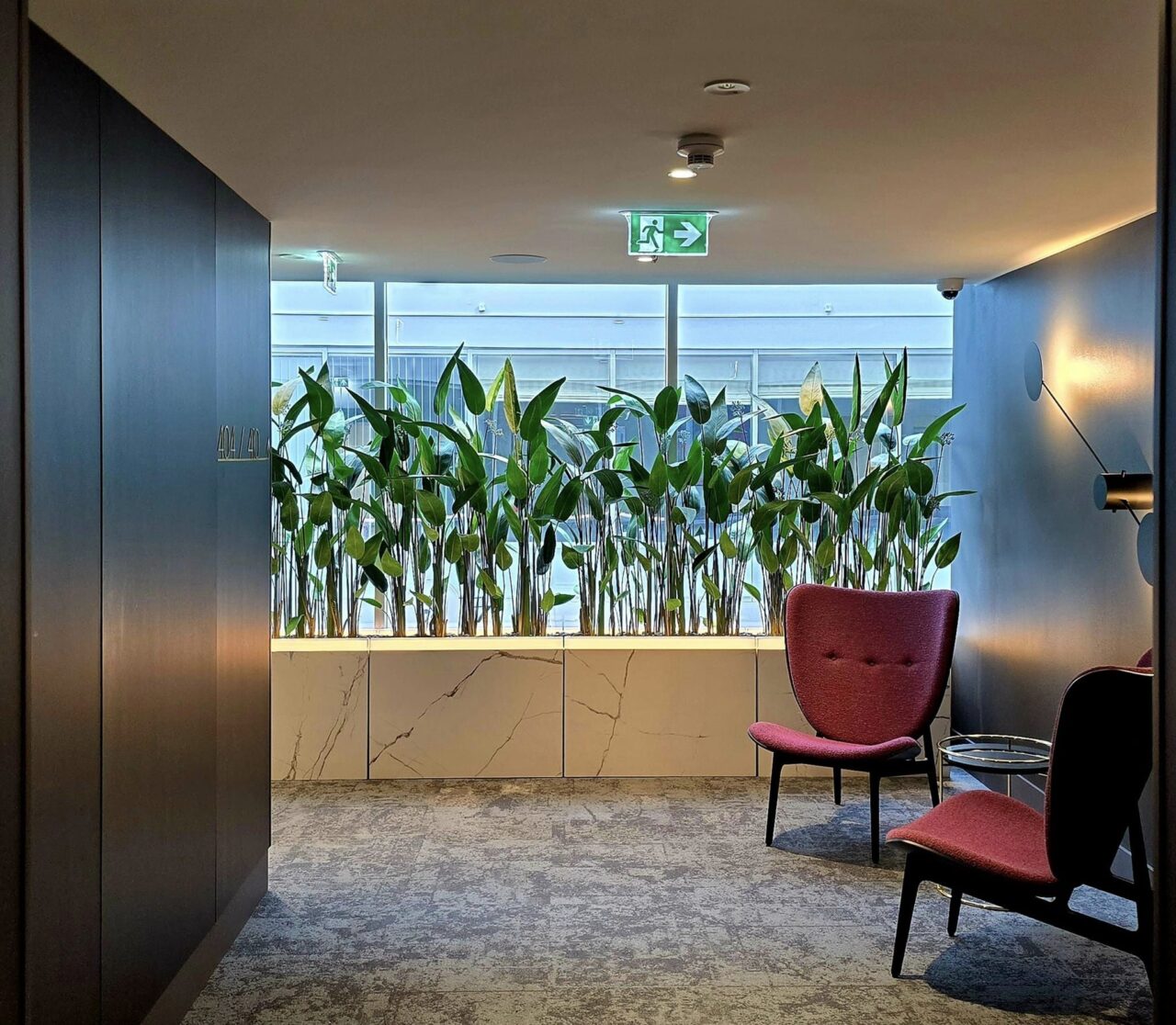
The most memorable hospitality interiors feel coherent from the moment a guest arrives. Light, greenery, materials and circulation work together to create an atmosphere that is welcoming, calm and easy to navigate. Hotel planters can support all four elements when they are treated as part of the architectural concept rather than as decoration added at the end.
Lumillio illuminated planters combine planting, integrated light and a considered material finish in one freestanding design element. This gives hospitality teams and designers a flexible way to shape lobbies, lounges, restaurants, spa areas and terraces without introducing heavy construction.
Why hotel planters are part of the spatial concept
In a hotel, every public area has several jobs to perform. A lobby needs to welcome guests, guide them towards reception and provide comfortable places to pause. A restaurant needs intimacy without feeling closed. A terrace needs structure while remaining open and relaxed.
Commercial planters can help define these spaces while keeping visual continuity. The planting softens hard architectural surfaces, the planter gives the arrangement a clear form, and integrated light creates a warm visual anchor after dark.
This is especially useful in open-plan hospitality interiors where fixed walls would reduce flexibility. A group of illuminated planters can create a boundary between reception and lounge seating while maintaining sightlines. The same approach can separate dining zones or mark the transition between indoor and outdoor areas.
Where illuminated planters work in hotels
Hotel lobbies and reception areas
The lobby establishes the first impression of the property. A carefully positioned planter can frame the reception desk, soften a waiting area or guide movement through a large entrance space. Choosing a finish that reflects the surrounding stone, timber or upholstery helps the planter feel integrated into the interior.
Lounges and meeting areas
Planters can create comfortable visual separation between seating groups without making the space feel divided. Integrated light adds a lower layer of illumination that complements ceiling and wall lighting, particularly during the evening.
Restaurants and bars
In dining spaces, greenery can support privacy and create more intimate zones. Planters can also help connect the material palette of the restaurant with the wider hotel interior. Dark ceramic, natural timber or bespoke surfaces can each create a different mood.
Terraces and entrances
Outdoor hotel planters help structure arrival areas, terraces and covered spaces. When selecting products for exterior use, the specification should account for the location, weather exposure, planting requirements and electrical installation. Lumillio can support project-specific planning through its B2B service.
Choosing the right material and collection
The material should support the architectural brief and the daily demands of the space.
- Collection Nemea uses thermowood finishes that bring natural warmth and tactile texture.
- Collection Strata offers architectural ceramic finishes ranging from graphite and mist to sand and travertine.
- Collection Linea uses refined veneer finishes for premium interior environments.
- Collection Atelier supports bespoke applications in natural stone, ceramic and other tailored surfaces.
The best choice depends on the location, scale, lighting concept and surrounding materials. A dark ceramic finish may add contrast in a bright stone lobby, while warm timber can make a lounge or restaurant feel more relaxed. Bespoke surfaces are useful when the planter needs to align closely with a wider interior specification.
Plan the planting, light and proportions together
A successful hotel planter is not only about the container. The planting height, form and density affect privacy and visibility. The light level affects the evening atmosphere. The planter proportions affect movement and furniture placement.
Before specifying a solution, consider:
- The role of the planter in the space: focal point, divider, wayfinding element or atmospheric lighting.
- The viewing angles from entrances, seating and circulation routes.
- The relationship between planter height and the selected plants.
- The surrounding material and colour palette.
- Indoor or outdoor conditions and the required technical specification.
- Access for planting care and long-term maintenance.
Working through these decisions early helps the planter become part of the design language rather than a separate accessory.
From a single lobby feature to a coordinated hotel concept
One planter can create a strong focal point, but coordinated forms and materials can also connect several guest areas. A hotel may use related finishes in the entrance, lounge and restaurant while adapting the size and planting to each location. This creates consistency without making every area look identical.
Lumillio has worked with professional spaces since 2013 and can support both standard collections and tailored project solutions. Explore completed environments in the Lumillio gallery or contact the studio to discuss a hospitality project.